Lưu trữ Danh mục: Bookkeeping

How Do You Analyze a Bank’s Financial Statements?

bank income statement

This income is critical as banks diversify revenue amid fluctuating interest rates and regulatory pressures. Fee-based services, like account maintenance and transaction charges, provide stable income less affected by interest rate volatility. Retail banks often focus on consumer loans, mortgages, and credit cards, while commercial banks emphasize business loans and lines of credit.

HUMAN CAPITAL

  • In multiple-step income statements, tax is shown on its own line, completely separate from all other business expenses.
  • CFI is the global institution behind the financial modeling and valuation analyst FMVA® Designation.
  • The return-on-assets (ROA) ratio is frequently applied to banks because the cash flow analysis is more difficult to accurately construct.
  • The income statement also shows how much fixed costs, such as rent, eat into profits.
  • Horizontal analysis is a technique that involves comparing historical data to detect growth trends across different time periods.

Analysts look at net interest margin income and other fundamentals to value bank shares. Banks accept deposits from consumers and businesses and pay interest in return. For example, a bank may have a high net interest margin (NIM) due to its lending practices, but if economic conditions change and interest rates decrease, the NIM may also decrease, impacting the bank’s profitability. Similarly, a bank may have a high asset quality ratio due to its conservative lending practices, but if economic conditions deteriorate, the asset quality ratio may worsen due to an increase in non-performing loans. The retail banking industry includes those banks that provide direct services such as checking accounts, savings accounts, and investment accounts, along with loan services, to individual consumers. However, most retail banks are commercial banks that service corporate customers as well as individuals.

Revenue

The Dodd-Frank Act also introduced new regulations for banks, such as stress testing and living wills, which have increased the level of disclosure and transparency in bank financial statements. The cash flow statement provides information about the bank’s cash inflows and outflows during the reporting period. It shows how the bank generated and used its cash, including cash from operating activities, investing activities, and financing activities. The cash flow statement is important because it helps investors and analysts understand how the bank is managing its liquidity and whether it has enough cash to meet its obligations. The banking industry is structurally different from many other industries since its primary product is money.

Data Collection and Analytics

  • For instance, a consulting company may earn some rental revenue from properties owned.
  • When the interest a bank earns from loans exceeds the interest paid on deposits, it generates income from the interest rate spread.
  • Depreciation represents the reduction in value of tangible assets (e.g., buildings, equipment) over time, while amortization refers to the gradual write-down of intangible assets (e.g., software, goodwill).
  • By using various techniques such as horizontal, vertical, or ratio analysis, investors can gain a more nuanced picture of a company’s financial profile.
  • Banks need to pay interest on customer deposits (e.g., savings accounts, certificates of deposit), as well as on loans and bonds issued.
  • However, analysts must separate recurring earnings from one-time events, such as asset sales or restructuring charges.

The total value of transactions done through this app stood at close to ₹11,000 billion in fiscal 2024. If you subtract all the outgoings from the money the company received, you are left with $21,350. For example, Derivatives are financial contracts whose value is derived from an underlying asset, index, or reference rate. Ernest Zulauf is a https://codoh.info/why-not-learn-more-about-2 seasoned writer with a passion for crafting informative and engaging content. This can be a sustainable strategy, but it also means the company may struggle to increase sales volume.

bank income statement

bank income statement

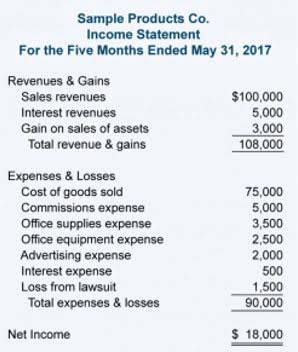
In this tutorial we’ll learn the purpose of this key accounting report and go over a simple income statement example to learn its format and components. Cost of goods and services in an income statement denote the expenses incurred to sell the final goods. They also include the costs of materials used to https://pushclouds.cc/spouse-of-terraform-labs-do-kwon-scores-major-victory-in-south-korean-court develop the products and the labor needed to get the goods to market.

The interest rate environment also affects interest income; rising rates can increase income on variable-rate loans but may raise funding costs. A bank generates income when the interest it earns from loans exceeds the interest paid on deposits. In the U.S., banks are regulated by multiple agencies, including the Federal Deposit Insurance Corporation (FDIC). Changes in interest rates may affect the volume of certain types of banking activities that generate fee-related income. The volume of residential mortgage loan originations typically declines as interest rates rise, resulting in lower originating fees. Banks tend to earn more interest income on variable-rate loans since they can increase the rate they charge borrowers, as in the case of credit cards.

However, analysts must separate recurring earnings from one-time events, such as asset sales or restructuring charges. For example, a spike in net income from a subsidiary sale may not indicate sustainable profitability. Adjusted earnings, which exclude such anomalies, provide a clearer view of operational performance. Non-interest income is a diverse revenue stream, including fees, commissions, and other non-lending activities.

Earning Power Definition: Key Components and Financial Insights

bank income statement

These margins can help https://templotibidabo.info/how-profitable-is-it-to-sell-my-house-to-a-quick-home-sale-investor-in-virginia/ you understand where a company’s costs are low or high at different points in its operations. Key profitability metrics include the net profit margin, which reveals the percentage of revenue converted into profits after all operating expenses, taxes, and interest payments are accounted for. A higher net profit margin indicates lower financial risk and a greater likelihood of sustained profitability. Pre-tax income (also known as profit before tax) is calculated after subtracting all operating expenses, provisions, and interest expenses from total revenue but before accounting for taxes.

How Do You Analyze a Bank’s Financial Statements?

bank income statement

This income is critical as banks diversify revenue amid fluctuating interest rates and regulatory pressures. Fee-based services, like account maintenance and transaction charges, provide stable income less affected by interest rate volatility. Retail banks often focus on consumer loans, mortgages, and credit cards, while commercial banks emphasize business loans and lines of credit.

HUMAN CAPITAL

  • In multiple-step income statements, tax is shown on its own line, completely separate from all other business expenses.
  • CFI is the global institution behind the financial modeling and valuation analyst FMVA® Designation.
  • The return-on-assets (ROA) ratio is frequently applied to banks because the cash flow analysis is more difficult to accurately construct.
  • The income statement also shows how much fixed costs, such as rent, eat into profits.
  • Horizontal analysis is a technique that involves comparing historical data to detect growth trends across different time periods.

Analysts look at net interest margin income and other fundamentals to value bank shares. Banks accept deposits from consumers and businesses and pay interest in return. For example, a bank may have a high net interest margin (NIM) due to its lending practices, but if economic conditions change and interest rates decrease, the NIM may also decrease, impacting the bank’s profitability. Similarly, a bank may have a high asset quality ratio due to its conservative lending practices, but if economic conditions deteriorate, the asset quality ratio may worsen due to an increase in non-performing loans. The retail banking industry includes those banks that provide direct services such as checking accounts, savings accounts, and investment accounts, along with loan services, to individual consumers. However, most retail banks are commercial banks that service corporate customers as well as individuals.

Revenue

The Dodd-Frank Act also introduced new regulations for banks, such as stress testing and living wills, which have increased the level of disclosure and transparency in bank financial statements. The cash flow statement provides information about the bank’s cash inflows and outflows during the reporting period. It shows how the bank generated and used its cash, including cash from operating activities, investing activities, and financing activities. The cash flow statement is important because it helps investors and analysts understand how the bank is managing its liquidity and whether it has enough cash to meet its obligations. The banking industry is structurally different from many other industries since its primary product is money.

Data Collection and Analytics

  • For instance, a consulting company may earn some rental revenue from properties owned.
  • When the interest a bank earns from loans exceeds the interest paid on deposits, it generates income from the interest rate spread.
  • Depreciation represents the reduction in value of tangible assets (e.g., buildings, equipment) over time, while amortization refers to the gradual write-down of intangible assets (e.g., software, goodwill).
  • By using various techniques such as horizontal, vertical, or ratio analysis, investors can gain a more nuanced picture of a company’s financial profile.
  • Banks need to pay interest on customer deposits (e.g., savings accounts, certificates of deposit), as well as on loans and bonds issued.
  • However, analysts must separate recurring earnings from one-time events, such as asset sales or restructuring charges.

The total value of transactions done through this app stood at close to ₹11,000 billion in fiscal 2024. If you subtract all the outgoings from the money the company received, you are left with $21,350. For example, Derivatives are financial contracts whose value is derived from an underlying asset, index, or reference rate. Ernest Zulauf is a https://codoh.info/why-not-learn-more-about-2 seasoned writer with a passion for crafting informative and engaging content. This can be a sustainable strategy, but it also means the company may struggle to increase sales volume.

bank income statement

bank income statement

In this tutorial we’ll learn the purpose of this key accounting report and go over a simple income statement example to learn its format and components. Cost of goods and services in an income statement denote the expenses incurred to sell the final goods. They also include the costs of materials used to https://pushclouds.cc/spouse-of-terraform-labs-do-kwon-scores-major-victory-in-south-korean-court develop the products and the labor needed to get the goods to market.

The interest rate environment also affects interest income; rising rates can increase income on variable-rate loans but may raise funding costs. A bank generates income when the interest it earns from loans exceeds the interest paid on deposits. In the U.S., banks are regulated by multiple agencies, including the Federal Deposit Insurance Corporation (FDIC). Changes in interest rates may affect the volume of certain types of banking activities that generate fee-related income. The volume of residential mortgage loan originations typically declines as interest rates rise, resulting in lower originating fees. Banks tend to earn more interest income on variable-rate loans since they can increase the rate they charge borrowers, as in the case of credit cards.

However, analysts must separate recurring earnings from one-time events, such as asset sales or restructuring charges. For example, a spike in net income from a subsidiary sale may not indicate sustainable profitability. Adjusted earnings, which exclude such anomalies, provide a clearer view of operational performance. Non-interest income is a diverse revenue stream, including fees, commissions, and other non-lending activities.

Earning Power Definition: Key Components and Financial Insights

bank income statement

These margins can help https://templotibidabo.info/how-profitable-is-it-to-sell-my-house-to-a-quick-home-sale-investor-in-virginia/ you understand where a company’s costs are low or high at different points in its operations. Key profitability metrics include the net profit margin, which reveals the percentage of revenue converted into profits after all operating expenses, taxes, and interest payments are accounted for. A higher net profit margin indicates lower financial risk and a greater likelihood of sustained profitability. Pre-tax income (also known as profit before tax) is calculated after subtracting all operating expenses, provisions, and interest expenses from total revenue but before accounting for taxes.

How Do You Analyze a Bank’s Financial Statements?

bank income statement

This income is critical as banks diversify revenue amid fluctuating interest rates and regulatory pressures. Fee-based services, like account maintenance and transaction charges, provide stable income less affected by interest rate volatility. Retail banks often focus on consumer loans, mortgages, and credit cards, while commercial banks emphasize business loans and lines of credit.

HUMAN CAPITAL

  • In multiple-step income statements, tax is shown on its own line, completely separate from all other business expenses.
  • CFI is the global institution behind the financial modeling and valuation analyst FMVA® Designation.
  • The return-on-assets (ROA) ratio is frequently applied to banks because the cash flow analysis is more difficult to accurately construct.
  • The income statement also shows how much fixed costs, such as rent, eat into profits.
  • Horizontal analysis is a technique that involves comparing historical data to detect growth trends across different time periods.

Analysts look at net interest margin income and other fundamentals to value bank shares. Banks accept deposits from consumers and businesses and pay interest in return. For example, a bank may have a high net interest margin (NIM) due to its lending practices, but if economic conditions change and interest rates decrease, the NIM may also decrease, impacting the bank’s profitability. Similarly, a bank may have a high asset quality ratio due to its conservative lending practices, but if economic conditions deteriorate, the asset quality ratio may worsen due to an increase in non-performing loans. The retail banking industry includes those banks that provide direct services such as checking accounts, savings accounts, and investment accounts, along with loan services, to individual consumers. However, most retail banks are commercial banks that service corporate customers as well as individuals.

Revenue

The Dodd-Frank Act also introduced new regulations for banks, such as stress testing and living wills, which have increased the level of disclosure and transparency in bank financial statements. The cash flow statement provides information about the bank’s cash inflows and outflows during the reporting period. It shows how the bank generated and used its cash, including cash from operating activities, investing activities, and financing activities. The cash flow statement is important because it helps investors and analysts understand how the bank is managing its liquidity and whether it has enough cash to meet its obligations. The banking industry is structurally different from many other industries since its primary product is money.

Data Collection and Analytics

  • For instance, a consulting company may earn some rental revenue from properties owned.
  • When the interest a bank earns from loans exceeds the interest paid on deposits, it generates income from the interest rate spread.
  • Depreciation represents the reduction in value of tangible assets (e.g., buildings, equipment) over time, while amortization refers to the gradual write-down of intangible assets (e.g., software, goodwill).
  • By using various techniques such as horizontal, vertical, or ratio analysis, investors can gain a more nuanced picture of a company’s financial profile.
  • Banks need to pay interest on customer deposits (e.g., savings accounts, certificates of deposit), as well as on loans and bonds issued.
  • However, analysts must separate recurring earnings from one-time events, such as asset sales or restructuring charges.

The total value of transactions done through this app stood at close to ₹11,000 billion in fiscal 2024. If you subtract all the outgoings from the money the company received, you are left with $21,350. For example, Derivatives are financial contracts whose value is derived from an underlying asset, index, or reference rate. Ernest Zulauf is a https://codoh.info/why-not-learn-more-about-2 seasoned writer with a passion for crafting informative and engaging content. This can be a sustainable strategy, but it also means the company may struggle to increase sales volume.

bank income statement

bank income statement

In this tutorial we’ll learn the purpose of this key accounting report and go over a simple income statement example to learn its format and components. Cost of goods and services in an income statement denote the expenses incurred to sell the final goods. They also include the costs of materials used to https://pushclouds.cc/spouse-of-terraform-labs-do-kwon-scores-major-victory-in-south-korean-court develop the products and the labor needed to get the goods to market.

The interest rate environment also affects interest income; rising rates can increase income on variable-rate loans but may raise funding costs. A bank generates income when the interest it earns from loans exceeds the interest paid on deposits. In the U.S., banks are regulated by multiple agencies, including the Federal Deposit Insurance Corporation (FDIC). Changes in interest rates may affect the volume of certain types of banking activities that generate fee-related income. The volume of residential mortgage loan originations typically declines as interest rates rise, resulting in lower originating fees. Banks tend to earn more interest income on variable-rate loans since they can increase the rate they charge borrowers, as in the case of credit cards.

However, analysts must separate recurring earnings from one-time events, such as asset sales or restructuring charges. For example, a spike in net income from a subsidiary sale may not indicate sustainable profitability. Adjusted earnings, which exclude such anomalies, provide a clearer view of operational performance. Non-interest income is a diverse revenue stream, including fees, commissions, and other non-lending activities.

Earning Power Definition: Key Components and Financial Insights

bank income statement

These margins can help https://templotibidabo.info/how-profitable-is-it-to-sell-my-house-to-a-quick-home-sale-investor-in-virginia/ you understand where a company’s costs are low or high at different points in its operations. Key profitability metrics include the net profit margin, which reveals the percentage of revenue converted into profits after all operating expenses, taxes, and interest payments are accounted for. A higher net profit margin indicates lower financial risk and a greater likelihood of sustained profitability. Pre-tax income (also known as profit before tax) is calculated after subtracting all operating expenses, provisions, and interest expenses from total revenue but before accounting for taxes.

How Do You Analyze a Bank’s Financial Statements?

bank income statement

This income is critical as banks diversify revenue amid fluctuating interest rates and regulatory pressures. Fee-based services, like account maintenance and transaction charges, provide stable income less affected by interest rate volatility. Retail banks often focus on consumer loans, mortgages, and credit cards, while commercial banks emphasize business loans and lines of credit.

HUMAN CAPITAL

  • In multiple-step income statements, tax is shown on its own line, completely separate from all other business expenses.
  • CFI is the global institution behind the financial modeling and valuation analyst FMVA® Designation.
  • The return-on-assets (ROA) ratio is frequently applied to banks because the cash flow analysis is more difficult to accurately construct.
  • The income statement also shows how much fixed costs, such as rent, eat into profits.
  • Horizontal analysis is a technique that involves comparing historical data to detect growth trends across different time periods.

Analysts look at net interest margin income and other fundamentals to value bank shares. Banks accept deposits from consumers and businesses and pay interest in return. For example, a bank may have a high net interest margin (NIM) due to its lending practices, but if economic conditions change and interest rates decrease, the NIM may also decrease, impacting the bank’s profitability. Similarly, a bank may have a high asset quality ratio due to its conservative lending practices, but if economic conditions deteriorate, the asset quality ratio may worsen due to an increase in non-performing loans. The retail banking industry includes those banks that provide direct services such as checking accounts, savings accounts, and investment accounts, along with loan services, to individual consumers. However, most retail banks are commercial banks that service corporate customers as well as individuals.

Revenue

The Dodd-Frank Act also introduced new regulations for banks, such as stress testing and living wills, which have increased the level of disclosure and transparency in bank financial statements. The cash flow statement provides information about the bank’s cash inflows and outflows during the reporting period. It shows how the bank generated and used its cash, including cash from operating activities, investing activities, and financing activities. The cash flow statement is important because it helps investors and analysts understand how the bank is managing its liquidity and whether it has enough cash to meet its obligations. The banking industry is structurally different from many other industries since its primary product is money.

Data Collection and Analytics

  • For instance, a consulting company may earn some rental revenue from properties owned.
  • When the interest a bank earns from loans exceeds the interest paid on deposits, it generates income from the interest rate spread.
  • Depreciation represents the reduction in value of tangible assets (e.g., buildings, equipment) over time, while amortization refers to the gradual write-down of intangible assets (e.g., software, goodwill).
  • By using various techniques such as horizontal, vertical, or ratio analysis, investors can gain a more nuanced picture of a company’s financial profile.
  • Banks need to pay interest on customer deposits (e.g., savings accounts, certificates of deposit), as well as on loans and bonds issued.
  • However, analysts must separate recurring earnings from one-time events, such as asset sales or restructuring charges.

The total value of transactions done through this app stood at close to ₹11,000 billion in fiscal 2024. If you subtract all the outgoings from the money the company received, you are left with $21,350. For example, Derivatives are financial contracts whose value is derived from an underlying asset, index, or reference rate. Ernest Zulauf is a https://codoh.info/why-not-learn-more-about-2 seasoned writer with a passion for crafting informative and engaging content. This can be a sustainable strategy, but it also means the company may struggle to increase sales volume.

bank income statement

bank income statement

In this tutorial we’ll learn the purpose of this key accounting report and go over a simple income statement example to learn its format and components. Cost of goods and services in an income statement denote the expenses incurred to sell the final goods. They also include the costs of materials used to https://pushclouds.cc/spouse-of-terraform-labs-do-kwon-scores-major-victory-in-south-korean-court develop the products and the labor needed to get the goods to market.

The interest rate environment also affects interest income; rising rates can increase income on variable-rate loans but may raise funding costs. A bank generates income when the interest it earns from loans exceeds the interest paid on deposits. In the U.S., banks are regulated by multiple agencies, including the Federal Deposit Insurance Corporation (FDIC). Changes in interest rates may affect the volume of certain types of banking activities that generate fee-related income. The volume of residential mortgage loan originations typically declines as interest rates rise, resulting in lower originating fees. Banks tend to earn more interest income on variable-rate loans since they can increase the rate they charge borrowers, as in the case of credit cards.

However, analysts must separate recurring earnings from one-time events, such as asset sales or restructuring charges. For example, a spike in net income from a subsidiary sale may not indicate sustainable profitability. Adjusted earnings, which exclude such anomalies, provide a clearer view of operational performance. Non-interest income is a diverse revenue stream, including fees, commissions, and other non-lending activities.

Earning Power Definition: Key Components and Financial Insights

bank income statement

These margins can help https://templotibidabo.info/how-profitable-is-it-to-sell-my-house-to-a-quick-home-sale-investor-in-virginia/ you understand where a company’s costs are low or high at different points in its operations. Key profitability metrics include the net profit margin, which reveals the percentage of revenue converted into profits after all operating expenses, taxes, and interest payments are accounted for. A higher net profit margin indicates lower financial risk and a greater likelihood of sustained profitability. Pre-tax income (also known as profit before tax) is calculated after subtracting all operating expenses, provisions, and interest expenses from total revenue but before accounting for taxes.

How Do You Analyze a Bank’s Financial Statements?

bank income statement

This income is critical as banks diversify revenue amid fluctuating interest rates and regulatory pressures. Fee-based services, like account maintenance and transaction charges, provide stable income less affected by interest rate volatility. Retail banks often focus on consumer loans, mortgages, and credit cards, while commercial banks emphasize business loans and lines of credit.

HUMAN CAPITAL

  • In multiple-step income statements, tax is shown on its own line, completely separate from all other business expenses.
  • CFI is the global institution behind the financial modeling and valuation analyst FMVA® Designation.
  • The return-on-assets (ROA) ratio is frequently applied to banks because the cash flow analysis is more difficult to accurately construct.
  • The income statement also shows how much fixed costs, such as rent, eat into profits.
  • Horizontal analysis is a technique that involves comparing historical data to detect growth trends across different time periods.

Analysts look at net interest margin income and other fundamentals to value bank shares. Banks accept deposits from consumers and businesses and pay interest in return. For example, a bank may have a high net interest margin (NIM) due to its lending practices, but if economic conditions change and interest rates decrease, the NIM may also decrease, impacting the bank’s profitability. Similarly, a bank may have a high asset quality ratio due to its conservative lending practices, but if economic conditions deteriorate, the asset quality ratio may worsen due to an increase in non-performing loans. The retail banking industry includes those banks that provide direct services such as checking accounts, savings accounts, and investment accounts, along with loan services, to individual consumers. However, most retail banks are commercial banks that service corporate customers as well as individuals.

Revenue

The Dodd-Frank Act also introduced new regulations for banks, such as stress testing and living wills, which have increased the level of disclosure and transparency in bank financial statements. The cash flow statement provides information about the bank’s cash inflows and outflows during the reporting period. It shows how the bank generated and used its cash, including cash from operating activities, investing activities, and financing activities. The cash flow statement is important because it helps investors and analysts understand how the bank is managing its liquidity and whether it has enough cash to meet its obligations. The banking industry is structurally different from many other industries since its primary product is money.

Data Collection and Analytics

  • For instance, a consulting company may earn some rental revenue from properties owned.
  • When the interest a bank earns from loans exceeds the interest paid on deposits, it generates income from the interest rate spread.
  • Depreciation represents the reduction in value of tangible assets (e.g., buildings, equipment) over time, while amortization refers to the gradual write-down of intangible assets (e.g., software, goodwill).
  • By using various techniques such as horizontal, vertical, or ratio analysis, investors can gain a more nuanced picture of a company’s financial profile.
  • Banks need to pay interest on customer deposits (e.g., savings accounts, certificates of deposit), as well as on loans and bonds issued.
  • However, analysts must separate recurring earnings from one-time events, such as asset sales or restructuring charges.

The total value of transactions done through this app stood at close to ₹11,000 billion in fiscal 2024. If you subtract all the outgoings from the money the company received, you are left with $21,350. For example, Derivatives are financial contracts whose value is derived from an underlying asset, index, or reference rate. Ernest Zulauf is a https://codoh.info/why-not-learn-more-about-2 seasoned writer with a passion for crafting informative and engaging content. This can be a sustainable strategy, but it also means the company may struggle to increase sales volume.

bank income statement

bank income statement

In this tutorial we’ll learn the purpose of this key accounting report and go over a simple income statement example to learn its format and components. Cost of goods and services in an income statement denote the expenses incurred to sell the final goods. They also include the costs of materials used to https://pushclouds.cc/spouse-of-terraform-labs-do-kwon-scores-major-victory-in-south-korean-court develop the products and the labor needed to get the goods to market.

The interest rate environment also affects interest income; rising rates can increase income on variable-rate loans but may raise funding costs. A bank generates income when the interest it earns from loans exceeds the interest paid on deposits. In the U.S., banks are regulated by multiple agencies, including the Federal Deposit Insurance Corporation (FDIC). Changes in interest rates may affect the volume of certain types of banking activities that generate fee-related income. The volume of residential mortgage loan originations typically declines as interest rates rise, resulting in lower originating fees. Banks tend to earn more interest income on variable-rate loans since they can increase the rate they charge borrowers, as in the case of credit cards.

However, analysts must separate recurring earnings from one-time events, such as asset sales or restructuring charges. For example, a spike in net income from a subsidiary sale may not indicate sustainable profitability. Adjusted earnings, which exclude such anomalies, provide a clearer view of operational performance. Non-interest income is a diverse revenue stream, including fees, commissions, and other non-lending activities.

Earning Power Definition: Key Components and Financial Insights

bank income statement

These margins can help https://templotibidabo.info/how-profitable-is-it-to-sell-my-house-to-a-quick-home-sale-investor-in-virginia/ you understand where a company’s costs are low or high at different points in its operations. Key profitability metrics include the net profit margin, which reveals the percentage of revenue converted into profits after all operating expenses, taxes, and interest payments are accounted for. A higher net profit margin indicates lower financial risk and a greater likelihood of sustained profitability. Pre-tax income (also known as profit before tax) is calculated after subtracting all operating expenses, provisions, and interest expenses from total revenue but before accounting for taxes.
How Do You Analyze a Bank’s Financial Statements?

bank income statement

This income is critical as banks diversify revenue amid fluctuating interest rates and regulatory pressures. Fee-based services, like account maintenance and transaction charges, provide stable income less affected by interest rate volatility. Retail banks often focus on consumer loans, mortgages, and credit cards, while commercial banks emphasize business loans and lines of credit.

HUMAN CAPITAL

  • In multiple-step income statements, tax is shown on its own line, completely separate from all other business expenses.
  • CFI is the global institution behind the financial modeling and valuation analyst FMVA® Designation.
  • The return-on-assets (ROA) ratio is frequently applied to banks because the cash flow analysis is more difficult to accurately construct.
  • The income statement also shows how much fixed costs, such as rent, eat into profits.
  • Horizontal analysis is a technique that involves comparing historical data to detect growth trends across different time periods.

Analysts look at net interest margin income and other fundamentals to value bank shares. Banks accept deposits from consumers and businesses and pay interest in return. For example, a bank may have a high net interest margin (NIM) due to its lending practices, but if economic conditions change and interest rates decrease, the NIM may also decrease, impacting the bank’s profitability. Similarly, a bank may have a high asset quality ratio due to its conservative lending practices, but if economic conditions deteriorate, the asset quality ratio may worsen due to an increase in non-performing loans. The retail banking industry includes those banks that provide direct services such as checking accounts, savings accounts, and investment accounts, along with loan services, to individual consumers. However, most retail banks are commercial banks that service corporate customers as well as individuals.

Revenue

The Dodd-Frank Act also introduced new regulations for banks, such as stress testing and living wills, which have increased the level of disclosure and transparency in bank financial statements. The cash flow statement provides information about the bank’s cash inflows and outflows during the reporting period. It shows how the bank generated and used its cash, including cash from operating activities, investing activities, and financing activities. The cash flow statement is important because it helps investors and analysts understand how the bank is managing its liquidity and whether it has enough cash to meet its obligations. The banking industry is structurally different from many other industries since its primary product is money.

Data Collection and Analytics

  • For instance, a consulting company may earn some rental revenue from properties owned.
  • When the interest a bank earns from loans exceeds the interest paid on deposits, it generates income from the interest rate spread.
  • Depreciation represents the reduction in value of tangible assets (e.g., buildings, equipment) over time, while amortization refers to the gradual write-down of intangible assets (e.g., software, goodwill).
  • By using various techniques such as horizontal, vertical, or ratio analysis, investors can gain a more nuanced picture of a company’s financial profile.
  • Banks need to pay interest on customer deposits (e.g., savings accounts, certificates of deposit), as well as on loans and bonds issued.
  • However, analysts must separate recurring earnings from one-time events, such as asset sales or restructuring charges.

The total value of transactions done through this app stood at close to ₹11,000 billion in fiscal 2024. If you subtract all the outgoings from the money the company received, you are left with $21,350. For example, Derivatives are financial contracts whose value is derived from an underlying asset, index, or reference rate. Ernest Zulauf is a https://codoh.info/why-not-learn-more-about-2 seasoned writer with a passion for crafting informative and engaging content. This can be a sustainable strategy, but it also means the company may struggle to increase sales volume.

bank income statement

bank income statement

In this tutorial we’ll learn the purpose of this key accounting report and go over a simple income statement example to learn its format and components. Cost of goods and services in an income statement denote the expenses incurred to sell the final goods. They also include the costs of materials used to https://pushclouds.cc/spouse-of-terraform-labs-do-kwon-scores-major-victory-in-south-korean-court develop the products and the labor needed to get the goods to market.

The interest rate environment also affects interest income; rising rates can increase income on variable-rate loans but may raise funding costs. A bank generates income when the interest it earns from loans exceeds the interest paid on deposits. In the U.S., banks are regulated by multiple agencies, including the Federal Deposit Insurance Corporation (FDIC). Changes in interest rates may affect the volume of certain types of banking activities that generate fee-related income. The volume of residential mortgage loan originations typically declines as interest rates rise, resulting in lower originating fees. Banks tend to earn more interest income on variable-rate loans since they can increase the rate they charge borrowers, as in the case of credit cards.

However, analysts must separate recurring earnings from one-time events, such as asset sales or restructuring charges. For example, a spike in net income from a subsidiary sale may not indicate sustainable profitability. Adjusted earnings, which exclude such anomalies, provide a clearer view of operational performance. Non-interest income is a diverse revenue stream, including fees, commissions, and other non-lending activities.

Earning Power Definition: Key Components and Financial Insights

bank income statement

These margins can help https://templotibidabo.info/how-profitable-is-it-to-sell-my-house-to-a-quick-home-sale-investor-in-virginia/ you understand where a company’s costs are low or high at different points in its operations. Key profitability metrics include the net profit margin, which reveals the percentage of revenue converted into profits after all operating expenses, taxes, and interest payments are accounted for. A higher net profit margin indicates lower financial risk and a greater likelihood of sustained profitability. Pre-tax income (also known as profit before tax) is calculated after subtracting all operating expenses, provisions, and interest expenses from total revenue but before accounting for taxes.

A Guide to Full Cycle Accounts Payable Process in 2024

A balance on the right side (credit side) of an account in the general ledger. The seller refers to the invoice as a sales invoice and the buyer refers to the same invoice as a vendor invoice. If a supplier sold merchandise to a company on credit, the supplier is a creditor. A listing of the accounts that a company has available for recording transactions is known as the chart of accounts. We recommend that a professional who is well-versed in internal controls perform a review of your company’s policies and procedures. A discount of 1% for paying 20 days early equates to an annual interest rate of approximately 18%.

Updating Records Once The Bill Is Received

The vendor invoice will include details on the quantity of goods or services, the price, payment terms, and a due date, such as net 30. Just like a fuel system supplies the engine with a steady flow of gas to keep it running, accounts payable manages the flow of invoices and payments in accounts payable process and out of your business. The accounts payable turnover ratio measures how quickly a company pays its bills.

Company Overview

accounts payable process

If you have a longstanding relationship with a vendor or are completing a bulk purchase, you may be able to negotiate a modest discount. When the vendor sends an invoice, the invoice number should match the number on your purchase order. When inventory items are acquired or produced at varying costs, the company will need to make an assumption on how to flow the changing costs. Sales are reported in the accounting period in which title to the merchandise was transferred from the seller to the buyer. The responsibility for compliance with sales and use taxes rests with each company.

Challenges In the Manual Accounts Payable (AP) Process

Ditching manual data entry also helps reduce human errors and frees up time for other tasks. But when AP is stuck doing things manually, it can slow things down and make it tough for your business to scale. When your accounts payable team is in sync with the entire payment process, it makes it easier for your company to keep a clear record of all its financial promises. This also means you’ll have a much better handle on when those payments are actually due, helping you stay organized and avoid any surprises like unexpected late fees or cash flow crunches.

Are Accounts Payable A Current Liability?

Additionally, automation can help improve visibility into the AP process, making tracking and managing invoices easier. Your purchase documents and records are often scattered across different departments or stored in multiple systems. Your AP team compares the invoice details with the corresponding purchase order to ensure that quantities, prices, and other terms align. The main goal of the AP process revolves around safeguarding the integrity of payments and capitalizing on opportunities for cost savings. Generally, the steps involved in an AP process may vary depending on the complexity of your company. Despite being a crucial function, AP has become an undeniable drain on organisational resources, encumbered by obsolete manual processes and cumbersome frameworks.

  • Every accounts payable department has a process to follow before making a vendor payment — this is the accounts payable process.
  • These processes may be more familiar to a finance department, who make sure services and products are paid for and notify the supplier of any issues.
  • Payments can be made via electronic transfers, checks, or automated clearing house (ACH) transactions.
  • Discover how Procurify’s AP automation tools can help streamline your workflow, reduce manual tasks, and improve financial visibility.
  • “Purchase and Receive Goods” is often handled by the Procurement team, with the AP team completing the remaining steps.
  • It is also necessary to review the receiving reports that have not yet been matched to vendor invoices.

Purchase Orders are documents issued by the procurement department of an organization that contain a written record of the goods or services requested along with the vendor details. It acts as the initiator of the process, which is then sent to the vendor or the supplier. Seek feedback from stakeholders, monitor accounts payable key performance indicators, and implement process enhancements to streamline operations and reduce errors. Manual invoice processing can be time-consuming, leading to longer payment cycles. Through electronic data capture, precise and consistent information is ensured, decreasing the chances of data entry errors and discrepancies in invoices.

To further complicate the situation, some organizations may be exempt from both a sales tax and a use tax depending on the state laws. By eliminating paper-based processes and reducing administrative overhead, businesses can lower operational costs and scale their AP processes to accommodate growth without additional resources. A purchase order (PO) is issued to the vendor, specifying the goods or services requested, pricing, terms, and expected delivery date.

  • By maximizing days payable outstanding (DPO), AP teams can increase working capital and improve free cash flow.
  • These mistakes can add up, inflating operational costs and harming the company’s financial reputation.
  • When employees incur expenses related to business activities, such as travel, accommodation, or meals, the company becomes liable for reimbursing these costs.
  • Approval is the process of authorizing payment for the invoice after verifying it.

And with exchange rates constantly fluctuating, paying the incorrect amount is all too easy. Accounts payable can make the most of these discounts by prioritizing critical invoices and resolving payment blocks to ensure invoices can be processed and paid at the right time. By automating these necessary but routine activities, AP teams can boost productivity and free up valuable time to work on value-add activities. Increasing touchless invoice rates is often one of the key accounts payable objectives.

accounts payable process

What factors should businesses consider when choosing accounts payable automation software?

At Business.org, our research is meant to offer general product and service recommendations. We don’t guarantee that our suggestions will work best for each individual or business, so consider your unique needs when choosing products and services. Zoho offers four pricing plans, ranging from its Basic plan for $9 per month to its Premium subscription, which goes for $32 per month.

What Is Accounts Payable (AP) Cycle?

An AP department also handles internal payments for business expenses, travel, and petty cash. When a company purchases goods and services from a supplier or creditor on credit that needs to be paid back quickly. The accounting entry to record this transaction is known as Accounts Payable (AP). Assigning someone to handle the accounts payable process will depend on your business’s structure. Usually, you can have a designated department to take care of it or hire an accountant or bookkeeper.

The purpose of payment is to fulfill the company’s obligation to pay for the goods or services received. Receiving invoices involves checking the details of the invoice against the details of the purchase order and the goods received note. A purchase order (PO) is a document issued by a company to a vendor or supplier that outlines the details of the goods or services the company wishes to purchase. The details entered on the check, vendor bank account details, payment vouchers, and the original bill and purchase order must be scrutinized. AP is also a direct line of contact between a business and its vendor representatives. Strong business relationships between the two could benefit the company and a vendor might offer relaxed credit terms.

When Do I Have to Report Gambling Winnings to the IRS?

Financial products are highly regulated so we work closely with partners to make sure the information we have on our site is accurate and includes any required legal language and disclaimers. Diversified, LLC does not provide tax advice and should not be relied upon for purposes of filing taxes, estimating tax liabilities or avoiding any tax or penalty imposed by law. There is a lack of clarity on the issue of whether up-front stakes reduce your taxable winnings by the amount that you initially wagered. Some guidelines indicate that if you stake $100 and collect $1,000, you must pay taxes on the full $1,000 collected. how will legal sports betting affect your income taxes Other sources of authority indicate that if you stake $100 and collect $1,000, you only need to pay taxes on the $900 by which you were enriched. Depending on the nature of your bet, you may receive a Form W-2G from whoever pays out your winnings.

Gambling Winnings Tax (How Much You Will Pay For Winning?)

  • If you’re betting through a sportsbook or casino, they are required to keep records of your winnings and losses and will report this information to the IRS at the end of each year.
  • Doing so for long enough (or with big enough winnings) will probably land you on hot water with the federal government as well.
  • Furthermore, increased tax revenues contribute directly to state budgets, allowing for improved public services and infrastructure investments.
  • Include taxable New Jersey Lottery and gambling winnings in the category of “net gambling winnings” on your New Jersey Gross Income Tax return.

This prevents taxpayers from offsetting other income with gambling losses. However, including the initial wager of a bet as part of your losses can help mitigate your taxable income. Taxable income from sports betting includes any money won from wagers placed on sporting events.

You can deduct your losses…to an extent

To offset gambling winnings with losses, taxpayers must adhere to IRS rules. Losses can only be deducted if the taxpayer itemizes deductions on their tax return. Those who claim the standard deduction cannot deduct gambling losses. The deduction is limited to the amount of reported gambling winnings.

For example, a car worth $30,000 is treated as taxable income, just as if you had won the same amount in cash. For mobile sports gambling, the online sportsbook has different thresholds and reporting requirements. Throughout the year, a taxpayer might receive a Form W2G for “one-time” winnings over the above thresholds at a casino, but sports betting is treated differently. Similar to the W2G forms, the issuer sends copies to both the player and the IRS, and the IRS will look for that detail on the player’s tax return. GAMBLING GOTCHA #2 – If you don’t itemize your deductions, you can’t deduct your losses.

The state where you live should give you a tax credit for taxes you pay to the other state. Individuals should seek the advice of their own tax advisor for specific information regarding tax consequences of investments. Investments in securities entail risk and are not suitable for all investors.

And they could withhold the tax from your payout to ensure they get what they’re owed. If you receive a W-2G form along with your gambling winnings, don’t forget that the IRS is also getting a copy of the form. So, the IRS expects you to claim those winnings on your tax return. Also, according to the IRS, “to deduct your gambling losses, you must be able to provide receipts, tickets, statements or other records that show the amount of both your winnings and losses.” If a W-2G is required, the payer (sports betting parlor, casino, racetrack, lottery, etc.) will need to see two forms of identification.

how will legal sports betting affect your income taxes

Unless gambling is your profession, your losses may not be deductible

Your tax bracket is based on your total taxable income, which includes any income you earn as an employee or contractor, as well as your sports betting winnings. Failing to report gambling winnings can result in financial penalties, interest charges, and potential legal consequences. The IRS treats unreported income as tax evasion, and if discrepancies are discovered, taxpayers may face audits or additional scrutiny. Even if a W-2G was not issued, the IRS can still identify unreported winnings through financial records, casino reporting, or third-party payment processors.

Online Therapy Services

how will legal sports betting affect your income taxes

If you come across an instance where tax is withheld from your gambling winnings, you will receive a W2-G form from the payer. Another crucial rule is that you cannot subtract the cost of gambling from your winnings. If we imagine you are betting on horse racing and you win $620 from a horse race, but it costs you $20 to bet, the total taxable winnings are $620, not $600. Landing a big win at a land-based casino or winning big through online sports betting is a great feeling. Sports betting has increased in popularity and has been a hot topic nationwide over the last few years. A recent study conducted by Nielson Company last year showed that 46% of American adults, nearly 106 million people, have at least some interests in sports betting.

  • You might be wondering if you must pay taxes on all your sports betting income, even if you end up losing money at the end of the year.
  • Throughout the year, a taxpayer might receive a Form W2G for “one-time” winnings over the above thresholds at a casino, but sports betting is treated differently.
  • The legalization and rapid expansion of sports betting across numerous states have marked a pivotal transformation in the gambling industry.
  • The payout doesn’t have to be 300 times the wager for these types of winnings.
  • Moreover, addressing market saturation requires strategic planning from stakeholders to differentiate their offerings effectively.

Reporting Your Winnings

Rocky Mengle was a Senior Tax Editor for Kiplinger from October 2018 to January 2023 with more than 20 years of experience covering federal and state tax developments. Before coming to Kiplinger, Rocky worked for Wolters Kluwer Tax & Accounting, and Kleinrock Publishing, where he provided breaking news and guidance for CPAs, tax attorneys, and other tax professionals. He has also been quoted as an expert by USA Today, Forbes, U.S. News & World Report, Reuters, Accounting Today, and other media outlets. Rocky holds a law degree from the University of Connecticut and a B.A. The IRS is always looking for supposed “business” activities that are just hobbies.

Professional gamblers can deduct their gambling losses as business expenses, which may provide greater tax benefits. This requires a more comprehensive accounting of their betting activities and adherence to specific IRS guidelines. You may be able to claim deductions for losses incurred while betting, but there are specific rules governing this process. This does not absolve you of responsibility to report that income yourself, in the same way that you still have to file your taxes even though the IRS has your W-2. It does mean, however, that you should be scrupulous when you file your taxes. There are many reasons not to do this, including the fact that the IRS may already know all about your income.

Qualified Business Asset Investment (QBAI) Exemption

Familiarize yourself with the rules for taxes on gambling winnings to ensure you remain compliant with the IRS. Sports betting and pari-mutuel horse racing have different criteria. If a single bet results in earnings of $600 or more and the payout is at least 300 times the wager, it must be reported. However, even if a W-2G is not issued, all gambling income must still be reported on your tax return.

There are no guarantees that working with an adviser will yield positive returns. The existence of a fiduciary duty does not prevent the rise of potential conflicts of interest. Sportsbooks will withhold 24% of winnings if you provided your Social Security number as regular withholding, or 24% as backup withholding if you didn’t provide your Social Security number. The following TurboTax Online offers may be available for tax year 2024. Intuit reserves the right to modify or terminate any offer at any time for any reason in its sole discretion.

How to Get Bookkeeping Clients: 11 Places Where Accounting Leads are Hiding

bookkeeping tips for clients

If your client base is looking for a bookkeeper or accounting firm, they’re reading reviews. A study by Accounting Today asked small businesses what they look for in an accountant. Seventy-eight percent of small businesses responded that it’s very important that their accountant can act as a trusted advisor. They ranked this as more important than being affordable or responsive. Check out our list of the 5 best client portals for accounting firms to help you choose which servic… Strong bookkeeping bookkeeping tips businesses aren’t built on guesswork; they’re engineered through intentional, measurable improvements.

Schedule Bookkeeping Activities Into Your Regular Day

To do this, offer free, valuable resources like an ebook, template, or checklist for their email addresses. A bookkeeper records income and expenses and categorizes them for specific periods. An accountant, meanwhile, helps file taxes and sets up the accounting backbone of the organization.

  • This calendar will ensure that all the tax filing is done before the deadline.
  • One way to ensure immediate access to your financial data is to use cloud accounting software.
  • Accurate bookkeeping allows you to generate reliable financial statements, like your income statement, balance sheet, and cash flow statement.
  • Keep refining your process as you go—every message, landing page, or client conversation is data.
  • While there are plenty of social media platforms, LinkedIn tends to be quite popular with business owners and professionals.

Need more time to focus on growing your bookkeeping client base?

bookkeeping tips for clients

This practice helps maintain a clear and organized bookkeeping system. Additionally, always note which customer made the cash payment; this way, you won’t mistakenly chase after payments later. If you’re unsure how to record cash transactions in your accounting software properly, consider consulting a bookkeeper for guidance. By following these essential bookkeeping tips for clients, you’ll stay organized, save time, and be prepared for tax season (without breaking a sweat). Remember to stay consistent, embrace modern tools, separate your finances, and keep an eye on your expenses. These small steps can make a big difference in keeping your finances on track and running smoothly.

bookkeeping tips for clients

Why use Wrike software to keep your books up to date?

bookkeeping tips for clients

Now, at DiLucci, he specializes in tax research, as well as developing tax solutions for our business clients. Consider charging hourly, per project, or offering package deals to suit different client needs. Regular payroll reconciliation helps clients track payroll costs accurately, simplifying budgeting and planning while also ensuring that your payroll totals are accurate.

Accounting Methods

bookkeeping tips for clients

When looking for help, we all want to choose a professional to help us. You wouldn’t want a doctor who is just interested in healing or medicine. You want a doctor who has attended a school https://www.bookstime.com/articles/return-on-investment-roi and studied for several years. You can also offer free consultations for people in need or add them to a special offer when they use your service.

bookkeeping tips for clients

If the monthly rate of a bookkeeper is less https://pamelarussell.org/how-to-find-the-best-cpa-or-tax-accountant-near/ than that, you may have your answer. With a heavy emphasis on deadlines and accuracy, bookkeeping can get pretty stressful. It’s important to stay on top of it, but you should also listen to yourself and know when it’s starting to weigh on you. Aldridge, Borden & Company chose BILL to save at least 50% of the time they used to spend on accounts payable. Beyond that, integrations keep numbers clean and up to date, helping them scale their operations quickly and efficiently—to match any level of growth.

How to Get Bookkeeping Clients: 11 Places Where Accounting Leads are Hiding

bookkeeping tips for clients

If your client base is looking for a bookkeeper or accounting firm, they’re reading reviews. A study by Accounting Today asked small businesses what they look for in an accountant. Seventy-eight percent of small businesses responded that it’s very important that their accountant can act as a trusted advisor. They ranked this as more important than being affordable or responsive. Check out our list of the 5 best client portals for accounting firms to help you choose which servic… Strong bookkeeping bookkeeping tips businesses aren’t built on guesswork; they’re engineered through intentional, measurable improvements.

Schedule Bookkeeping Activities Into Your Regular Day

To do this, offer free, valuable resources like an ebook, template, or checklist for their email addresses. A bookkeeper records income and expenses and categorizes them for specific periods. An accountant, meanwhile, helps file taxes and sets up the accounting backbone of the organization.

  • This calendar will ensure that all the tax filing is done before the deadline.
  • One way to ensure immediate access to your financial data is to use cloud accounting software.
  • Accurate bookkeeping allows you to generate reliable financial statements, like your income statement, balance sheet, and cash flow statement.
  • Keep refining your process as you go—every message, landing page, or client conversation is data.
  • While there are plenty of social media platforms, LinkedIn tends to be quite popular with business owners and professionals.

Need more time to focus on growing your bookkeeping client base?

bookkeeping tips for clients

This practice helps maintain a clear and organized bookkeeping system. Additionally, always note which customer made the cash payment; this way, you won’t mistakenly chase after payments later. If you’re unsure how to record cash transactions in your accounting software properly, consider consulting a bookkeeper for guidance. By following these essential bookkeeping tips for clients, you’ll stay organized, save time, and be prepared for tax season (without breaking a sweat). Remember to stay consistent, embrace modern tools, separate your finances, and keep an eye on your expenses. These small steps can make a big difference in keeping your finances on track and running smoothly.

bookkeeping tips for clients

Why use Wrike software to keep your books up to date?

bookkeeping tips for clients

Now, at DiLucci, he specializes in tax research, as well as developing tax solutions for our business clients. Consider charging hourly, per project, or offering package deals to suit different client needs. Regular payroll reconciliation helps clients track payroll costs accurately, simplifying budgeting and planning while also ensuring that your payroll totals are accurate.

Accounting Methods

bookkeeping tips for clients

When looking for help, we all want to choose a professional to help us. You wouldn’t want a doctor who is just interested in healing or medicine. You want a doctor who has attended a school https://www.bookstime.com/articles/return-on-investment-roi and studied for several years. You can also offer free consultations for people in need or add them to a special offer when they use your service.

bookkeeping tips for clients

If the monthly rate of a bookkeeper is less https://pamelarussell.org/how-to-find-the-best-cpa-or-tax-accountant-near/ than that, you may have your answer. With a heavy emphasis on deadlines and accuracy, bookkeeping can get pretty stressful. It’s important to stay on top of it, but you should also listen to yourself and know when it’s starting to weigh on you. Aldridge, Borden & Company chose BILL to save at least 50% of the time they used to spend on accounts payable. Beyond that, integrations keep numbers clean and up to date, helping them scale their operations quickly and efficiently—to match any level of growth.